Yuqi Weibo Controversy Explained: “One China,” Shuhua’s Taiwan Background, Tzuyu and Cube Entertainment
🎬 Official i-dle music video, included as background on the group. This is not a news report about the Weibo controversy.
The Yuqi Weibo controversy began on November 12, 2026, when the i-dle member reposted a Xinhua News Agency item linked to China’s Taiwan-unification message, according to Korean reports. Coverage on November 13 connected the post to the “One China” debate and raised questions about Shuhua, Yuqi’s bandmate who is from Taiwan. This article examines what was reported, how earlier statements are being interpreted, and whether claims of a feud have actually been substantiated.
This English edition follows the Korean article’s reporting cutoff of November 13, 2026. It distinguishes Beijing’s political position, Taiwan’s system of self-government, and fan reactions. Unconfirmed apologies, interpersonal disputes or suspensions are not presented as facts.
- Trigger: Yuqi’s reported November 12 repost of Xinhua material about unification
- Debate: The message was widely interpreted as aligning with the “One China” position
- Shuhua: Taiwanese i-dle member who was reappointed to promote Taoyuan tourism in 2026
- Past examples: Reports from 2019 and 2023 resurfaced amid the new coverage
- Important caution: A personal feud, formal apology or halt to group activities requires separate evidence
1. Yuqi Weibo controversy: What happened on November 12–13?
The Yuqi Weibo controversy began with a social-media post on November 12, 2026. According to Korean entertainment reports published the following day, Yuqi of the K-pop group i-dle, formerly known as (G)I-DLE, reposted a message from China’s state-run Xinhua News Agency and added wording that appeared to endorse its theme. Attention quickly shifted from the contents of the post to a question involving another member: how might the debate affect Shuhua, who is from Taiwan?
There are three layers to this story. First is the observable act of sharing the post. Second is the Chinese government’s position on Taiwan expressed in the material being shared. Third is the response from journalists and fans. These are related, but they are not interchangeable. Conflating them can turn assumptions about Yuqi’s motives or her relationship with Shuhua into unsupported claims.
| Date | Reported development |
|---|---|
| Nov. 12, 2026 | A Beijing commemoration of the 160th anniversary of Sun Yat-sen’s birth, featuring a speech by Xi Jinping |
| Nov. 12, 2026 | Yuqi reposted the related Xinhua material on Weibo, according to Korean reports |
| Nov. 13, 2026 | Korean outlets covered the “One China” controversy and the questions surrounding Shuhua |
Keeping the dates attached to each development matters. A statement published later should not be presented as though it had already been available on November 13. This initial timeline provides a useful starting point for readers following subsequent updates.
2. What did Yuqi repost on Weibo? Her words versus Xinhua’s message

Korean reports described Yuqi as sharing a state-media post while adding a line conveying a belief deeply held by descendants of the Chinese nation. The material she shared was associated with President Xi Jinping’s remarks at the Sun Yat-sen anniversary event. Yuqi’s own accompanying words are not the same as the full content of Xinhua’s post or Xi’s speech.
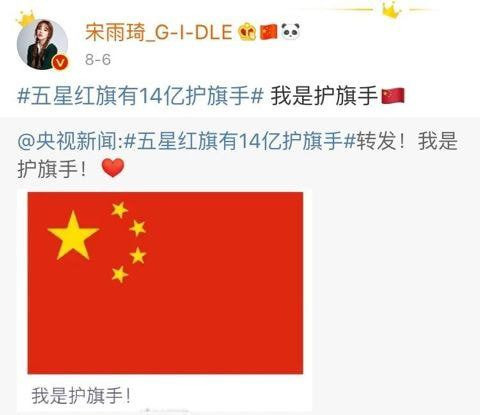
Sharing politically charged material with an approving caption can reasonably be interpreted as an endorsement. That helps explain why outlets covered the item as a controversy over support for the “One China” position rather than an ordinary event repost. Even so, the available post alone cannot establish who advised her, whether anyone pressured her, or what she privately intended.
Example 1: A headline claiming that “Yuqi delivered a speech calling for Taiwan’s unification” would be misleading. She reposted someone else’s material; she was not the speaker. Example 2: Saying she “shared a link without any comment” would also omit the approving language described in the reports. Precision matters more than the most dramatic possible phrasing.
3. Why Sun Yat-sen’s 160th anniversary and Xi Jinping’s speech matter
November 12, 2026 marked 160 years since the birth of Sun Yat-sen in 1866. A commemorative event took place at the Great Hall of the People in Beijing, where Chinese President Xi Jinping delivered remarks. Alongside historical references to Sun and China’s revolutionary past, the reported speech reiterated Beijing’s position on Taiwan and national unification.

Chinese official messaging links Taiwan’s future to the goal of national unification. Since the Xinhua item reposted by Yuqi concerned that speech, a K-pop star’s social-media activity immediately became entangled with cross-strait politics. Sun Yat-sen is commemorated in both mainland China and Taiwan, although the political meanings assigned to his legacy can differ.
The event itself, the content of Xi’s speech and Yuqi’s decision to share a related post are three separate facts to assess. Their connection does not prove that everyone involved holds precisely the same views on every political question.
4. What does “One China” mean? Principle versus policy

Beijing’s “One China principle” is its position that Taiwan is part of China and that there is only one legitimate government representing China. Beijing presents the issue as one involving sovereignty and national unification. Taiwan, however, has its own democratically elected government, military and administrative institutions, and its government rejects Beijing’s claim of sovereignty over the island.
The “One China policies” used by other governments in diplomacy are not necessarily identical to Beijing’s principle. Countries formulate their positions differently, including how they acknowledge Beijing’s stance and how they maintain practical or unofficial relations with Taiwan. It would therefore be inaccurate to say that every country makes the same legal judgment about Taiwan merely because a diplomatic document contains the words “One China.”
| Perspective | Key distinction |
|---|---|
| Beijing’s principle | Taiwan is claimed as part of China; national unification is emphasized |
| Taiwan’s current governance | Separate democratic elections, government, armed forces and administrative system |
| Other countries’ policies | Diplomatic recognition and practical ties with Taiwan vary by country |
That distinction is relevant to the Weibo debate. Understanding whether a repost is a broad expression of national identity or support for a specific political claim about Taiwan requires reading the actual message and its context, not just its shorthand label.
5. How China–Taiwan relations became a K-pop controversy

Why has an issue generally associated with foreign policy become such a prominent K-pop discussion? International idol groups include members from different backgrounds and perform for audiences across numerous countries. When questions of national identity enter that environment, the same message can carry very different meanings to different listeners.
Beijing describes unification with Taiwan as a national priority, while many people in Taiwan emphasize democracy and the preservation of their existing political system. When performers from mainland China and Taiwan belong to the same group, public political messaging can lead fans to question what it means for the group’s image or internal relationships.
But fans worrying about future performances is not evidence that performances have been cancelled. Searches such as “Yuqi leaving i-dle,” “Shuhua leaving i-dle,” or “i-dle disbandment” should be treated as speculation unless the group or its agency announces a specific change.
6. Yuqi profile: Age, real name, nationality and hometown
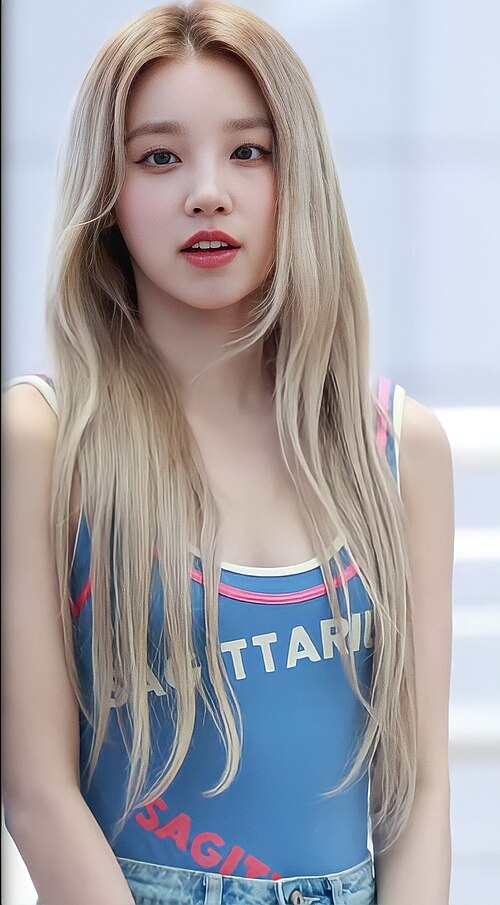
Yuqi’s birth name is Song Yuqi (宋雨琦). She was born on September 23, 1999, and was 27 years old as of November 13, 2026. She is from Beijing, China. Yuqi debuted with i-dle in 2018 and has also appeared in entertainment and music projects in China.

Known for her distinctive lower-register voice and energetic television personality, Yuqi has built a following through music and variety shows. Her public image as a performer, however, should not be confused with the meaning of a political social-media post. A person’s nationality alone does not establish every aspect of their political beliefs.
| Profile item | Yuqi |
|---|---|
| Birth name | Song Yuqi / 宋雨琦 |
| Date of birth | September 23, 1999 |
| Age | 27 as of November 2026 |
| Hometown | Beijing, China |
| Group | i-dle (formerly (G)I-DLE), debuted in 2018 |
| Career | Singer and television personality |
For readers looking up her age, the reference date is important: she turned 27 on September 23, 2026. Earlier articles may list a different age simply because they were written in an earlier year.
7. Shuhua’s Taiwan background, age and Taoyuan tourism role

Shuhua was born on January 6, 2000, in Taiwan. She was 26 in November 2026 and has been a member of i-dle since the group’s 2018 debut. She became part of this discussion not because she posted the Xinhua material herself, but because she is a Taiwanese member of the same group.
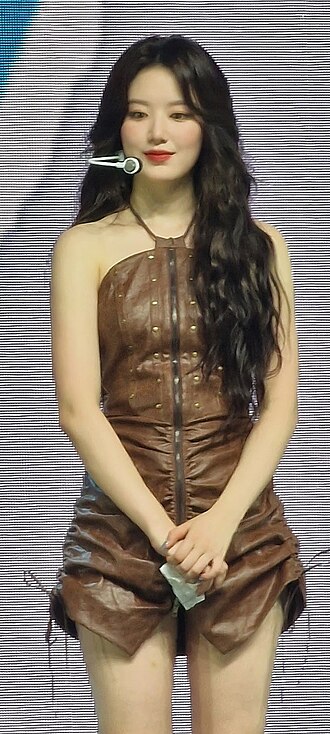
A separate November 3, 2026 report said Shuhua had been appointed a tourism ambassador for her hometown of Taoyuan for a second consecutive year. Promotional work associated with “Shuhua’s Perspective” introduced local culture and destinations, including tourism and night-market attractions.
These activities show that Shuhua has publicly promoted her hometown. They do not reveal her feelings about Yuqi’s latest post. Nor should Shuhua be expected to make an unsolicited political statement simply because of where she was born.
8. Are Yuqi and Shuhua fighting? What can actually be confirmed
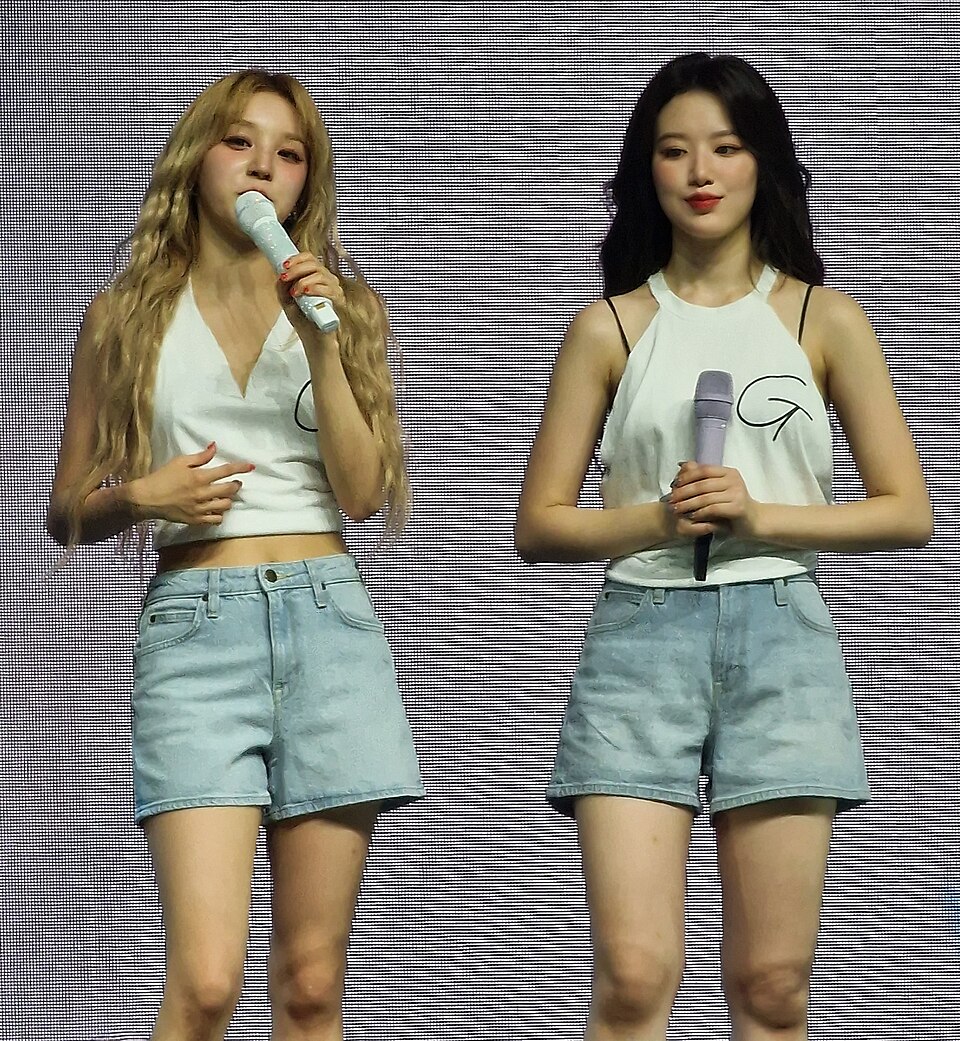
The search phrase “Yuqi Shuhua feud” is understandable in the context of the controversy: one member reposted material linked to Beijing’s unification narrative, and another member comes from Taiwan. Yet different backgrounds and a sensitive public debate do not demonstrate that two coworkers have had a personal dispute.
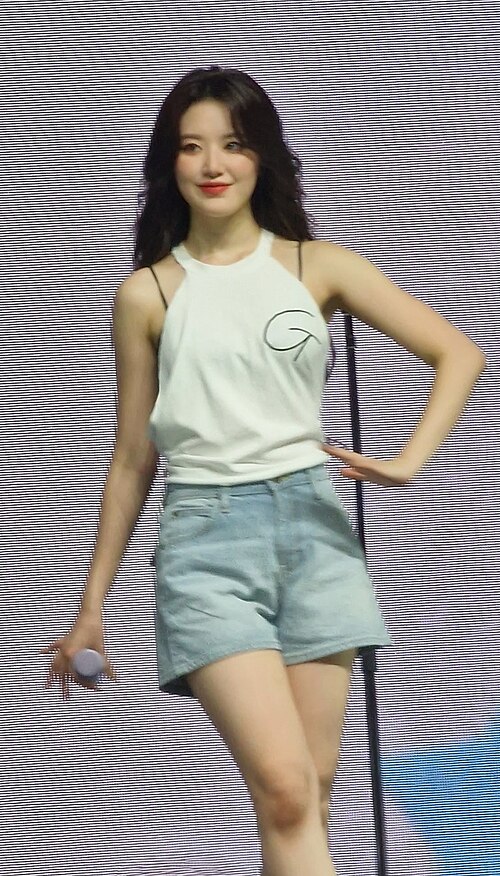
Reports available as of November 13, 2026 discussed the repost and Shuhua’s background. They did not establish a confrontation between the members, a statement from Shuhua expressing anger over the post, or a confirmation from their agency of an internal conflict.
Example 3: A short clip in which two members appear awkward on stage can be misleading when separated from the complete recording and its date. Example 4: A fan account’s allegation about an “unfollow” should not be treated as proven without checking which accounts were involved and when. Claims about a feud need evidence independent of the political headlines.
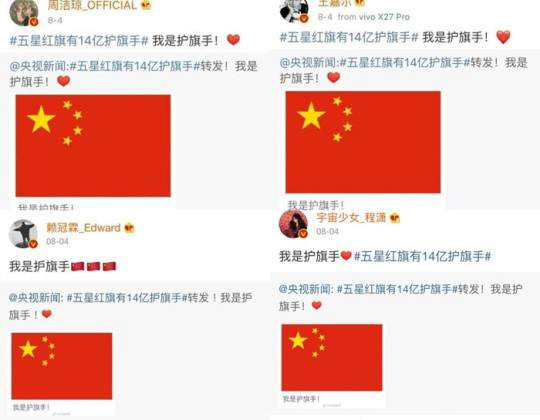
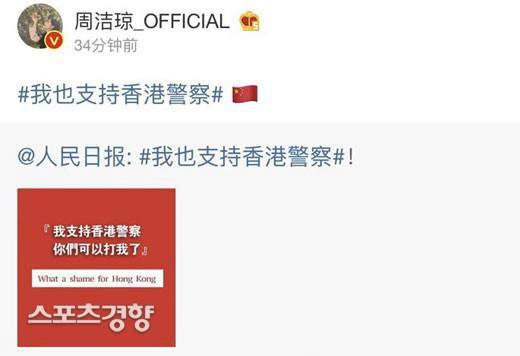
9. Yuqi’s reported 2019 Hong Kong protest-related post
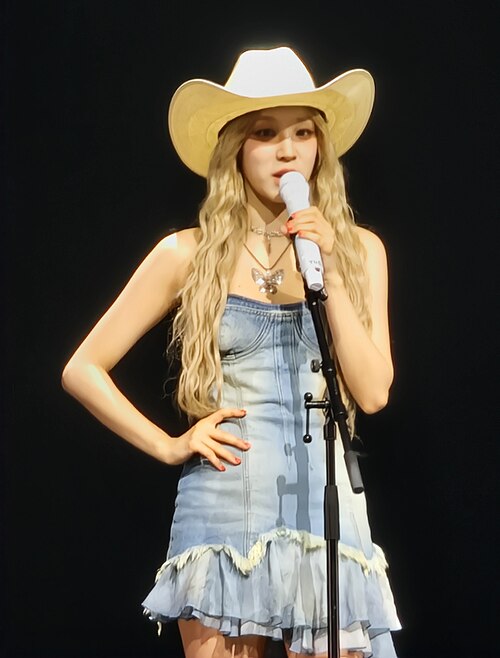
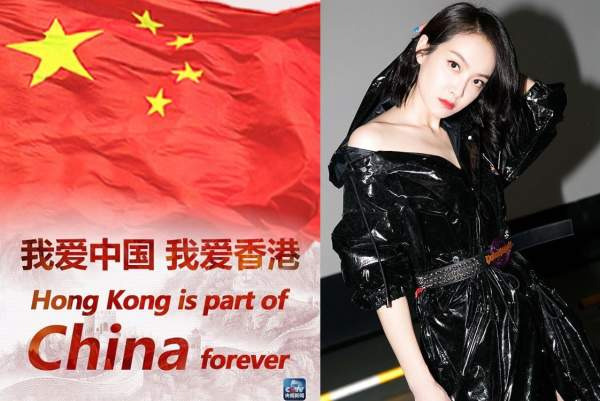
Some Korean coverage of the new controversy also revisited social-media messages posted by Chinese K-pop idols during the 2019 Hong Kong protests. At that time, statements expressing support for the Chinese government’s position drew international debate, and Yuqi was named in reports concerning related reposts.
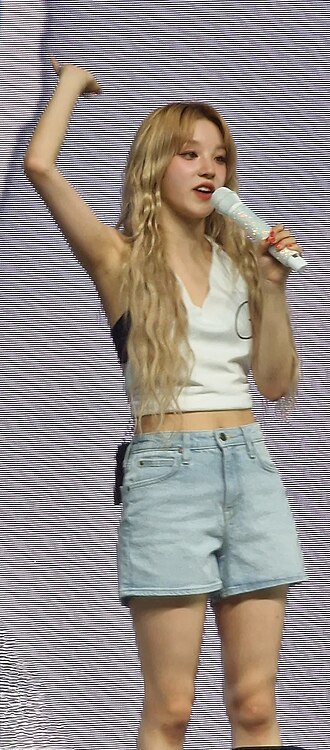
The 2019 issue concerned the Hong Kong protests, while the immediate trigger in 2026 was a state-media item tied to a speech about Taiwan and unification. Both involve questions of Chinese national identity, but they are distinct episodes with different subjects, dates and messages. They should not be treated as one continuous event.
| Year | Earlier episode now being discussed |
|---|---|
| 2019 | Reports of China-supporting social-media posts during the Hong Kong protests |
| 2023 | Reports that Yuqi used the phrase “Taiwan, China” on a variety show |
| 2026 | Yuqi’s Weibo repost of Xinhua material connected to unification messaging |
Revisiting earlier reports may provide context for a public figure’s social-media history. It does not, by itself, establish the detailed motivation behind a new post or predict what that person will do next.
10. The 2023 “Taiwan, China” remark: How was it different?
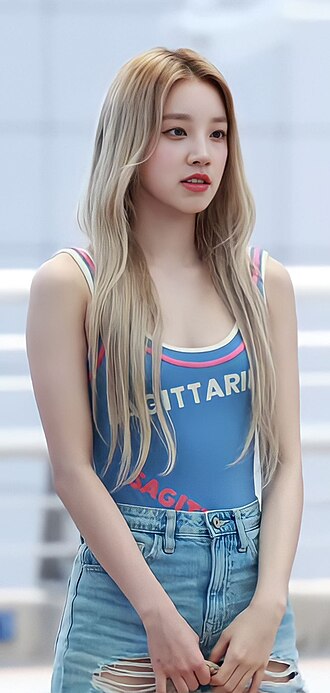
Korean outlets previously reported that, while discussing i-dle’s performance in Taiwan on the Chinese variety program Keep Running in 2023, Yuqi referred to the destination as “Taiwan, China.” Shuhua’s Taiwanese background also drew attention at the time. That incident has resurfaced because people now associate it with the 2026 Weibo debate.

There is a significant distinction: the 2023 discussion concerned how a place was described during entertainment-program conversation. The 2026 controversy concerns sharing state-media material containing an overt political message about unification. Both mention Taiwan, but their form, context and potential implications differ.
Information about the location of an actual concert should not be conflated with a political judgment about the territory where that concert took place. Separating venue details from disputed terminology makes the story easier to understand accurately.
11. Why TWICE’s Tzuyu Taiwan flag controversy is being recalled

The experience of TWICE member Tzuyu, who is also from Taiwan, is often cited as an example of how cross-strait politics can affect K-pop idols. A clip showing her holding a Taiwanese flag during a Korean broadcast-related recording became the focus of backlash in China in 2016, and she subsequently appeared in an apology video.
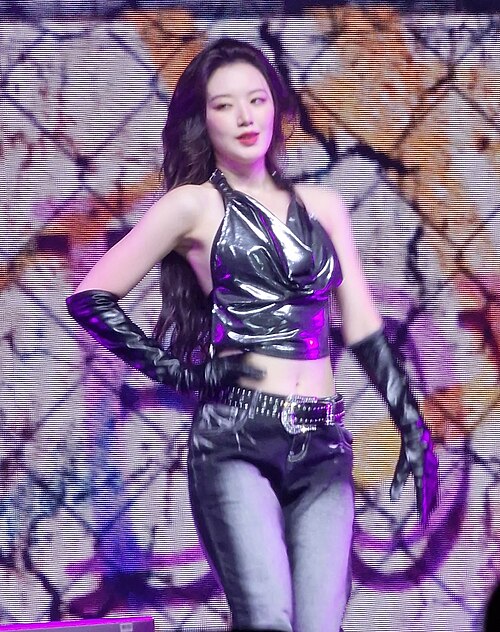
Some online commentators in China treated the flag as a political expression. In Taiwan, the demand that a young Taiwanese singer apologize for holding the flag prompted a strong reaction. The episode illustrated how ordinary actions by entertainers can be assigned international political meanings.
Tzuyu’s case and Yuqi’s Weibo repost are not the same incident. Tzuyu’s case centered on displaying a flag; Yuqi’s centers on sharing political messaging. Shuhua’s background explains why the cases are compared, but there is no established report that Shuhua has issued an apology or faced an equivalent sanction in this controversy.
12. i-dle’s multinational lineup and the role of nationality

The members of i-dle are Miyeon, Minnie, Soyeon, Yuqi and Shuhua. Yuqi is from China and Shuhua from Taiwan, while the other members bring their own backgrounds and professional experiences to the group. This international makeup is one of K-pop’s strengths, but it can also complicate how fans interpret a political statement outside the music itself.

Fan reactions should not be presented as unanimous. Some people urge readers to consider the social and industry pressures that Chinese entertainers may encounter. Others focus on the responsibility of globally active performers to consider colleagues and audiences affected by politically sensitive messaging.
Without a credible survey, neither side can claim to speak for the entire fandom. A clearer picture comes from concrete developments, such as official schedules, new music releases, any agency statements and comments directly attributable to the artists.
13. Was Yuqi’s repost voluntary? What the available evidence cannot tell us

A frequent question is whether Yuqi chose to publish the message freely or felt pressure because she works in China as well as internationally. A public post alone cannot settle that question. Private beliefs, industry norms and public expectations are possible areas of discussion, but none should be presented as a verified explanation of her individual decision without supporting evidence.

Two opposite assumptions are especially unhelpful: that every political statement must perfectly reflect the author’s innermost beliefs, or that every such statement from a Chinese celebrity must have been compelled. The political meaning of the message can be analyzed without claiming to know someone’s private circumstances.
Likewise, a high number of comments or reposts may demonstrate attention, but it does not establish the truth of every assertion circulating alongside the story. Distinguish the original post from translations, news summaries and unsupported social-media claims.
14. Cube Entertainment response and apology: What is confirmed?
Searches for “Yuqi apology,” “Cube Entertainment statement” and “Shuhua reaction” rose alongside the coverage. However, the reports reviewed in the Korean source article as of November 13, 2026 did not establish that Yuqi had apologized or that Cube had published an official apology about this particular Weibo post. A subsequent statement, if any, needs to be assessed by its publication date and actual wording.
The original incident and a potential response are separate developments. Fans calling for an apology does not mean the company has apologized. Similarly, a demand for suspended activities does not mean a suspension or a contract change has taken place.
| Search phrase | What must be checked |
|---|---|
| Yuqi Weibo post | Reporting on the November 12 repost and its wording |
| Yuqi–Shuhua feud | Independent evidence of a direct conflict |
| Cube Entertainment apology | An official statement specifically addressing this incident |
| Changes to i-dle activities | A verified schedule change or announcement |
It is particularly easy to misattribute an older Cube Entertainment statement about an unrelated matter to a newer story. Look for the exact subject, date and official channel before treating a circulating screenshot as the agency’s response.
15. Yuqi Weibo fact-check: Five developments worth monitoring

When more articles appear, follow a straightforward verification sequence: (1) review the original Weibo post and its timestamp; (2) identify the subject of the Xinhua item that was shared; (3) look for statements actually made by Yuqi or Shuhua; (4) check whether Cube Entertainment has issued an official response; and (5) confirm whether any performance, release or broadcast schedule has changed.
A single screenshot may crop out important context. Reading only a translated snippet can also make it hard to tell whose words are whose. “Reposted a message” is different from “delivered the speech,” just as “fans expressed concern” is different from “the members confirmed a dispute.”
Readers are free to criticize or defend a public political message. Assigning unverified feelings to Shuhua, however, is a separate matter. As described in the November 13 source article, the established focus was the Weibo repost and the discussion surrounding it, not a confirmed feud or breakup of the group. Future updates should be judged against that distinction.
❓ Frequently Asked Questions: Top 5
Q1. Did Yuqi publicly support the “One China” position?
Korean outlets reported that on November 12, 2026, she reposted state-media material related to Taiwan and unification, with wording interpreted as supportive. That is the basis for the controversy; the detailed circumstances of her decision have not been independently established in this article.
Q2. What are Yuqi’s age, nationality and real name?
Yuqi is from Beijing, China. Her real name is Song Yuqi (宋雨琦), and she was born on September 23, 1999. She was 27 as of November 2026.
Q3. Is Shuhua Chinese or Taiwanese?
Shuhua is from Taiwan. Taiwan operates its own democratically elected government; Beijing claims sovereignty over it. She has also participated in tourism promotion for her hometown of Taoyuan.
Q4. Did Yuqi and Shuhua fight over the post?
No verified confrontation or official announcement of a feud was established in the reports summarized by the original article. Their different places of origin are not proof of a personal dispute.
Q5. Has Cube Entertainment issued an apology?
The Korean source article did not establish an official apology about this specific Weibo post as of November 13, 2026. Any later statement should be evaluated separately with its date and full text.
✅ Conclusion: Separate the Political Message from the Members’ Relationship
The documented starting point of the Yuqi Weibo controversy, as described by Korean outlets, is her November 12 repost of a Xinhua item associated with Xi Jinping’s remarks at the Sun Yat-sen commemoration. The fact that Shuhua is from Taiwan heightened the attention surrounding the story. The earlier 2019 and 2023 reports and Tzuyu’s 2016 flag incident offer political and cultural context, but they are separate events.
For future updates, focus on three things: the original post and its wording, statements from the people or agency involved, and verifiable changes to group activities. Those checks provide a more reliable account than speculation built around dramatic headlines. This article reflects the information summarized in the Korean version as of November 13, 2026, rather than an independently updated account of later developments.